The Silent Cost of Poor IT Infrastructure Most Companies Ignore
Introduction
Most businesses don’t notice poor IT infrastructure until it starts costing them money.
Not in obvious ways like a major cyberattack or total system collapse, but through the silent daily losses that slowly drain productivity, customer trust, employee morale, and revenue.
A slow internet connection during a client presentation, systems crashing during peak business hours, employees wasting hours waiting for outdated software to load, frequent downtime that disrupts operations, and poor network security exposing sensitive business data.
These issues may seem “normal,” especially for businesses operating in Africa where power outages, aging hardware, and budget constraints are common. In 2026, poor IT infrastructure is no longer just an inconvenience, it’s a business risk.
At African Business Solutions Provider (ABSP), we’ve seen firsthand how outdated systems quietly hold businesses back from growth, scalability, and competitiveness.
What Is IT Infrastructure and Why Does It Matter?
IT infrastructure refers to the technology foundation that keeps your business running, including:
- Networks and internet connectivity
- Servers and cloud systems
- Business software
- Computers and devices
- Cybersecurity systems
- Data storage and backups
- Communication and collaboration tools
Think of it this way:
Your IT infrastructure is like the roads of your business. When roads are damaged, traffic slows down and when infrastructure is weak, business slows down too.
The Hidden Costs Most Businesses Ignore
1. Productivity Losses
One of the biggest hidden costs is wasted employee time.
Employees dealing with:
- Slow systems
- Repeated logins
- Software crashes
- File access delays
- Poor integrations
…can lose hours every week.
Now multiply that across an entire company for months or years.
The losses become enormous.
Example:
A staff member waiting just 10 extra minutes daily for systems to respond loses over 40 hours yearly — essentially an entire workweek gone.
2. Downtime Costs More Than You Think
Downtime is expensive.Very expensive.
For African SMEs, the impact can be even worse because many businesses lack:
- Backup systems
- Redundant internet
- Disaster recovery plans
- Cloud failover infrastructure
Real African Impact:
Imagine:
- A supermarket POS system failing during month-end sales
- A logistics company losing tracking access
- A clinic unable to retrieve patient files
- An online store going offline during a marketing campaign
Customers rarely wait patiently in 2026. They simply move to competitors.
3. Poor Customer Experience
Modern customers expect:
- Fast websites
- Quick responses
- Smooth digital experiences
- Reliable online services
If your systems are slow, your brand feels outdated.
In Africa’s growing digital economy, businesses with poor digital experiences risk being left behind by faster, tech-enabled competitors.
4. Cybersecurity Vulnerabilities
Legacy infrastructure creates dangerous security gaps.
According to TechRadar, outdated systems and technical debt remain major attack vectors for cybercriminals because older systems often lack:
- Modern authentication
- Security patches
- Encryption standards
- Proper monitoring
Many ransomware attacks succeed not because hackers are sophisticated, but because businesses are running outdated systems.
This is especially concerning in Africa, where many SMEs still rely on unsupported software and aging hardware due to cost constraints.
5. Employee Burnout & Frustration
Technology should make work easier.
But poor IT environments frustrate employees daily.
Repeated technical issues lead to:
- Lower morale
- Burnout
- Reduced efficiency
- Increased turnover
Top talent increasingly prefers organizations with modern, flexible, tech-enabled environments.
In competitive industries, outdated infrastructure can quietly push skilled employees away.
Why This Problem Is Growing in Africa
Africa’s digital transformation is accelerating rapidly.
Businesses are adopting:
- Cloud systems
- Mobile payments
- AI tools
- E-commerce
- Remote work technologies
But many companies are trying to run modern operations on outdated foundations.
Common challenges include:
- Unstable internet connectivity
- Legacy software
- Limited cybersecurity investment
- Aging hardware
- Lack of IT strategy
- Reactive instead of proactive maintenance
The result?
Businesses become digitally active, but not digitally resilient.
How Businesses Can Modernize Without Disrupting Operations
The good news:
You do not need to replace everything overnight.
At African Business Solutions Provider (ABSP), we help businesses modernize strategically and affordably through phased digital transformation.
Step 1: Audit Existing Infrastructure
Identify:
- Bottlenecks
- Security risks
- Slow systems
- Redundant tools
- Network weaknesses
You cannot fix what you cannot see.
Step 2: Prioritize Critical Systems
Focus first on:
- Customer-facing platforms
- Security systems
- Communication tools
- Backup systems
- Core operational software
Not every upgrade needs to happen immediately.
Step 3: Move Gradually to Cloud Solutions
Cloud infrastructure offers:
- Scalability
- Remote access
- Lower maintenance costs
- Better uptime
- Improved security
Hybrid approaches work well for many African businesses transitioning gradually.
Step 4: Strengthen Cybersecurity
Modern infrastructure must include:
- MFA
- Endpoint protection
- Backup systems
- Monitoring tools
- Zero Trust principles
Security can no longer be optional.
Step 5: Train Employees
Technology alone isn’t enough.
Employees must understand:
- Secure usage practices
- New workflows
- Collaboration tools
- Cyber hygiene
Strong infrastructure + informed people = resilient business.
ABSP Perspective: Infrastructure Is No Longer “Just IT”
At ABSP, we believe IT infrastructure is now a growth strategy not merely technical support.
Businesses with modern systems:
- Move faster
- Serve customers better
- Scale easier
- Recover quicker from disruptions
- Make smarter decisions using data
Meanwhile, businesses ignoring infrastructure modernization risk becoming slower, more vulnerable, and less competitive every year.
Final Thoughts
Poor IT infrastructure rarely destroys businesses overnight.
Instead, it slowly drains:
- Productivity
- Revenue
- Customer trust
- Innovation
- Employee morale
And by the time businesses realize the true cost, competitors have already moved ahead.
In 2026, strong IT infrastructure is not a luxury. It’s survival.
The businesses that win tomorrow are investing in resilient digital foundations today.
#ITInfrastructure #DigitalTransformation #BusinessGrowth #CyberSecurity #CloudComputing #TechInAfrica #DigitalAfrica #BusinessTechnology #ITSupport #NetworkSecurity #ABSP #FutureOfWork #DigitalInnovation #SMEs #AfricanBusiness
Recent Posts
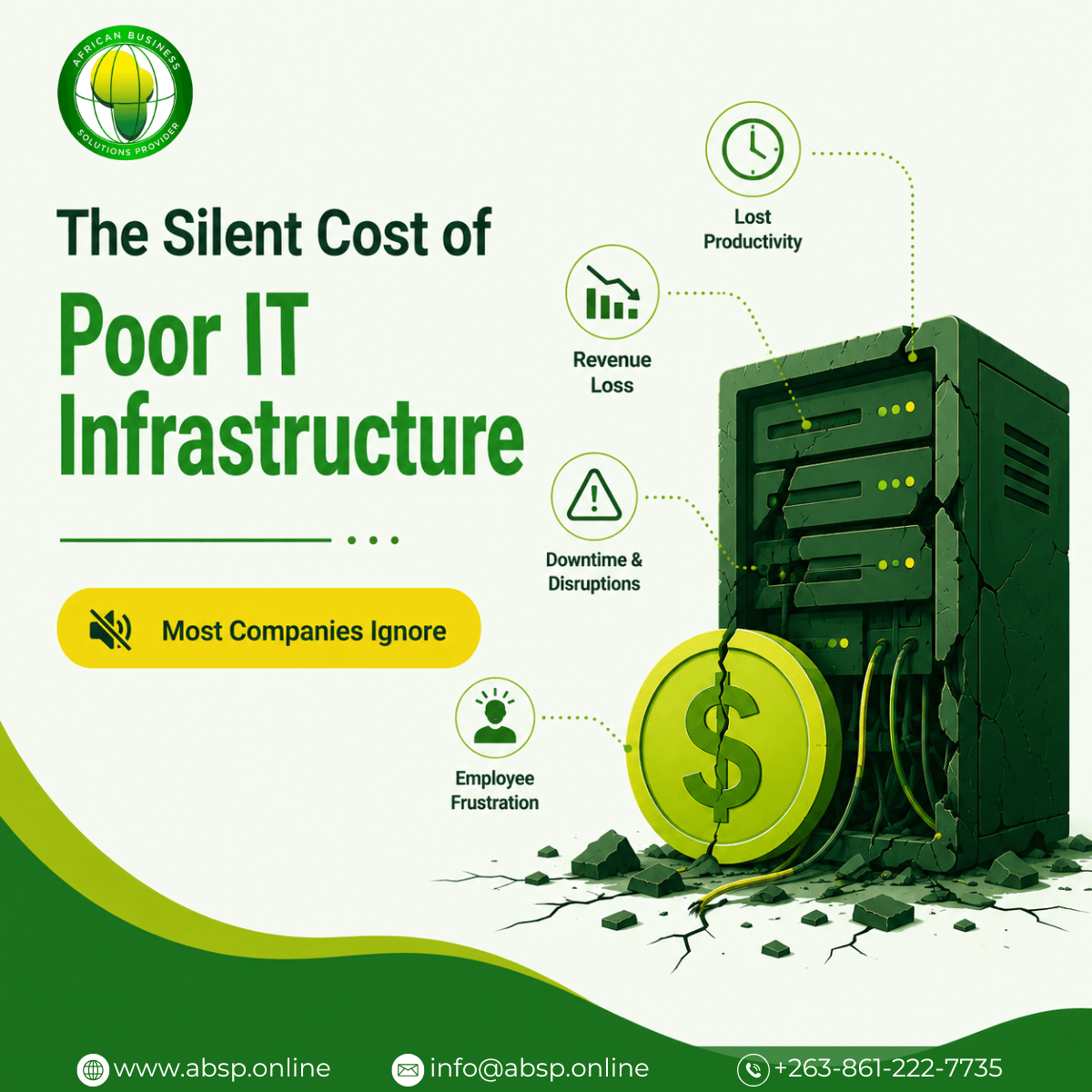
Most businesses don’t notice poor IT infrastructure until it starts costing them money.
For years, the digital divide was about access, who had technology and who didn’t.
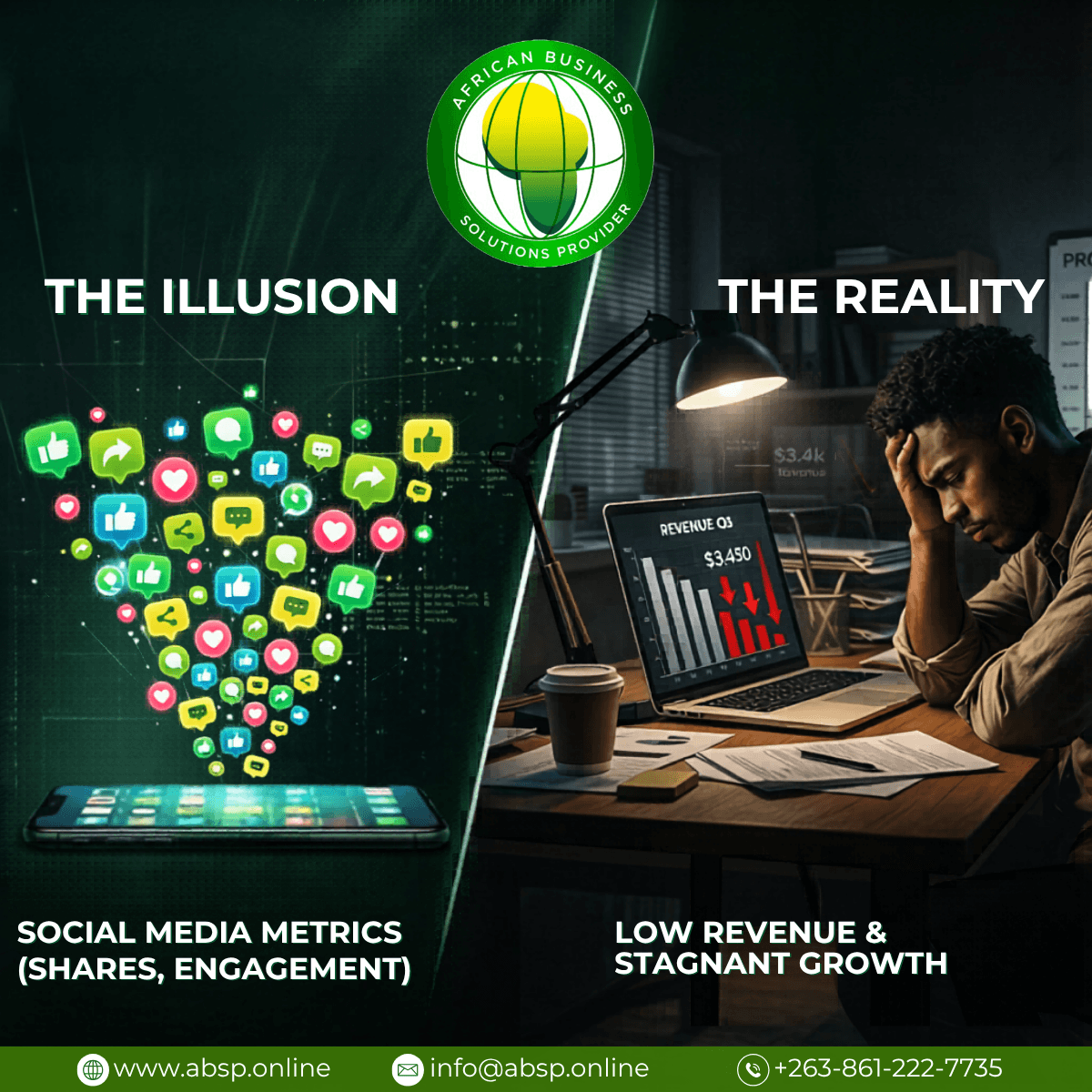
Likes are addictive. Comments feel validating. Shares look like momentum. But here’s the uncomfortable truth: engagement does not equal growth.
Comments
John Doe
January 26 2021
Lorem ipsum dolor sit amet, consectetur adipisicing elit. Architecto aspernatur cupiditate dolore laudantium magni maiore minus odit optio perspiciatis qui, rem sit unde? Aliquid dolor, eaque eligendi minus quis sequi?
John Doe
January 26 2021
Lorem ipsum dolor sit amet, consectetur adipisicing elit. Architecto aspernatur cupiditate dolore laudantium magni maiore minus odit optio perspiciatis qui, rem sit unde? Aliquid dolor, eaque eligendi minus quis sequi?